Why Collaborate?

In some part of our being we all know that collaboration is a healthy, positive activity that enriches our lives, benefits the people we are working with and more often than not, makes a positive contribution to making the world a better place. In the world of design, it is widely accepted that teamwork produces better outcomes. Freeman Thomas, credited as the designer of the iconic Audi TT car reckons: ‘ Good design begins with honesty, asks tough questions, comes from collaboration and from trusting your intuition’.

Then why do we find it so difficult?

Do we find collaboration elusive because we are insecure about our own abilities, or feel our ideas might become subsumed by others, encumbered by shyness or are simply uncomfortable in group situations. Whatever the reasons, it is worth overcoming the obstacles we put in front of ourselves and getting stuck into some meaningful shared learning and encouraging children to do it.

I remember when my daughters were young, getting together with friends and their children and observing with great hilarity our two year old offspring gathering up all of their favourite toys and protecting them so their ‘friends’ could not get near them let alone share and play together nicely with them. Of course this ‘selfish’ stage passes and children quickly learn through discovery and experience how to share, play and learn together.

Sharing and co-operation are learnt behaviours and as adults we need to model and support the skills required if we are going to facilitate children doing it successfully. On a recent design project where children are designing a building and sculpture garden, we went to London on a research trip and then facilitated a session that enabled them to share their initial inspiration and ideas collaboratively with fantastic results. If you haven’t tried this technique in your primary school, I’d highly recommend it. If you want kids to collaborate, let them roll themselves a big one!

Watch this little film to see what I mean.
POW – The Power of Writing

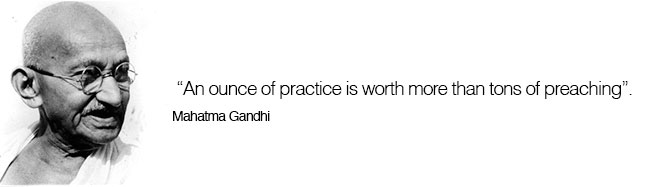
I’d like to start this post with a quote from a master of words who was able to understand and utilise their extraordinary power and ability to affect change:

quote5

And now to introduce POW…A modern day superhero representing the ‘Power of Writing’ on a mission to inspire creative writing in primary schools.

I had the pleasure recently of spending a day at Mahatma Gandhi’s residence in Mumbai and was very inspired by the simplicity of his approach to life and the absolute power contained in much of his writing, whether that be short quotes or letters to head of nations as part of his strategy for advocating a free India through non violence. In our technology driven modern communication network how many of us actually have the time to hand write? If it’s not a greetings card most of us type on a keyboard or smartphone and in the process, the speed of the activity may dilute some of the creative thought processes that go into our writing Ghandi’s hand written words in simple bound journals were incredibly powerful and helped me re-connect with the importance of children discovering their creativity, finding joy in the written word and understanding the power of writing.

Shireland Hall Primary School have been developing POW resources for a while now using a range of reward driven stimulus that focus on a ‘can do’ positive child centred approach. There are no longer mistakes in writing only interference and trickery from the ‘Flerbs’. Teachers are testing this new innovative resource within their literacy strategy in both KS1 & KS2 with amazing results. The children are really inspired and engaged by POW and his cloak of many letters and how he conquers the “Flerbs”, those pesky little creatures that can appear as pitiful punctuation or infect writing with grammatical errors!

Power of creative writing for primary school children

One slight unexpected drawback to this new superhero’s positive impact is that all the kids want to meet him in person and guess who has been unanimously nominated to don the lycra and bring this character to life….yes it’s me and I do admit I haven’t taken much persuading, apparently he looks a bit like me, which is slightly worrying, but hey it’s for the kids!

If you want to find out more about POW or try it in your school, just let us know.

Don’t read the label

‘Class Clown, Disruptive, Able, Slow, Difficult, Problematic, Genius…….& can you do this ‘fold over & tuck’ trick with your ear!?

ear-trick-1024x6821

In this health conscious world of ours we are encouraged to read the labels on food and discover precisely what we are putting into our bodies, check we are not ingesting a harmful chemical cocktail; count the carbs, fat, sugar etc. In reality, most of us take no notice, the chances are, if we are buying processed food, we are going to eat it regardless and console ourselves with thoughts of ‘ a little bit of what you fancy’ or ‘everything in moderation’. Adults are skilled at taking no notice of product labels (think about smokers lighting up after they have just been informed by every pack ‘these will kill you’). So I’m asking why can’t we apply this to kids in school? Is it possible, what would happen if we didn’t attach labels to them and accepted kids ( like grown ups) are a work in progress? Imagine a world where they are allowed to learn and grow ‘label free’?

We all readily use adjectives to describe children in school every day and it’s amazing how quickly these ‘labels’ become ‘sticky’ and invisibly attach themselves to a child. Almost instantly the kid feels obliged on a conscious or sub conscious level to inhabit and perform that role and it becomes acceptable for them and their peer group to accept and use this frame of reference. These labels can shape the way children feel about themselves and colour their perception of the world and stay with them throughout their education and beyond. I have heard so many friends say things like, ‘ I was no good at English, Art, etc or ‘I was the class clown so I didn’t learn much’ ‘ and usually this perception (which is always untrue) can be traced to a comment from a significant and trusted adult that carried a ‘sticky label’. Anyone ever saying anything to you when you were a kid, that you internalised and then took ages to shake off?

‘Gifted, shy, clever, slow, challenging, difficult, hopeless, trouble, polite, bright, motivated, disinterested’: these are all labels I have heard used by well meaning adults sharing a few helpful tips about behaviour management. Of course, these  words may have, in one past moment, been an accurate and appropriate description of an act, but that moment passes, the behaviour becomes history, and the label should be recognised as temporary too. Is there a way of just making these observations impermanent ‘post it’ notes that can easily be removed again?

Theres a real delight in encouraging and inspiring children to be themselves and to enjoy their learning journey in every way possible, to take risks, ask difficult questions and ‘fail’ without prejudice. Language is power, can we communicate without the inhibiting, restrictive nature of vocalising labels, they can and do impact negatively. There’s no harm in thinking labellious thoughts, ( I know, I made that word up), we are probably conditioned to do so, but can we be mindful enough to a keep them safe and silent between our ears? (whether we can do the fold over & tuck trick or not)!